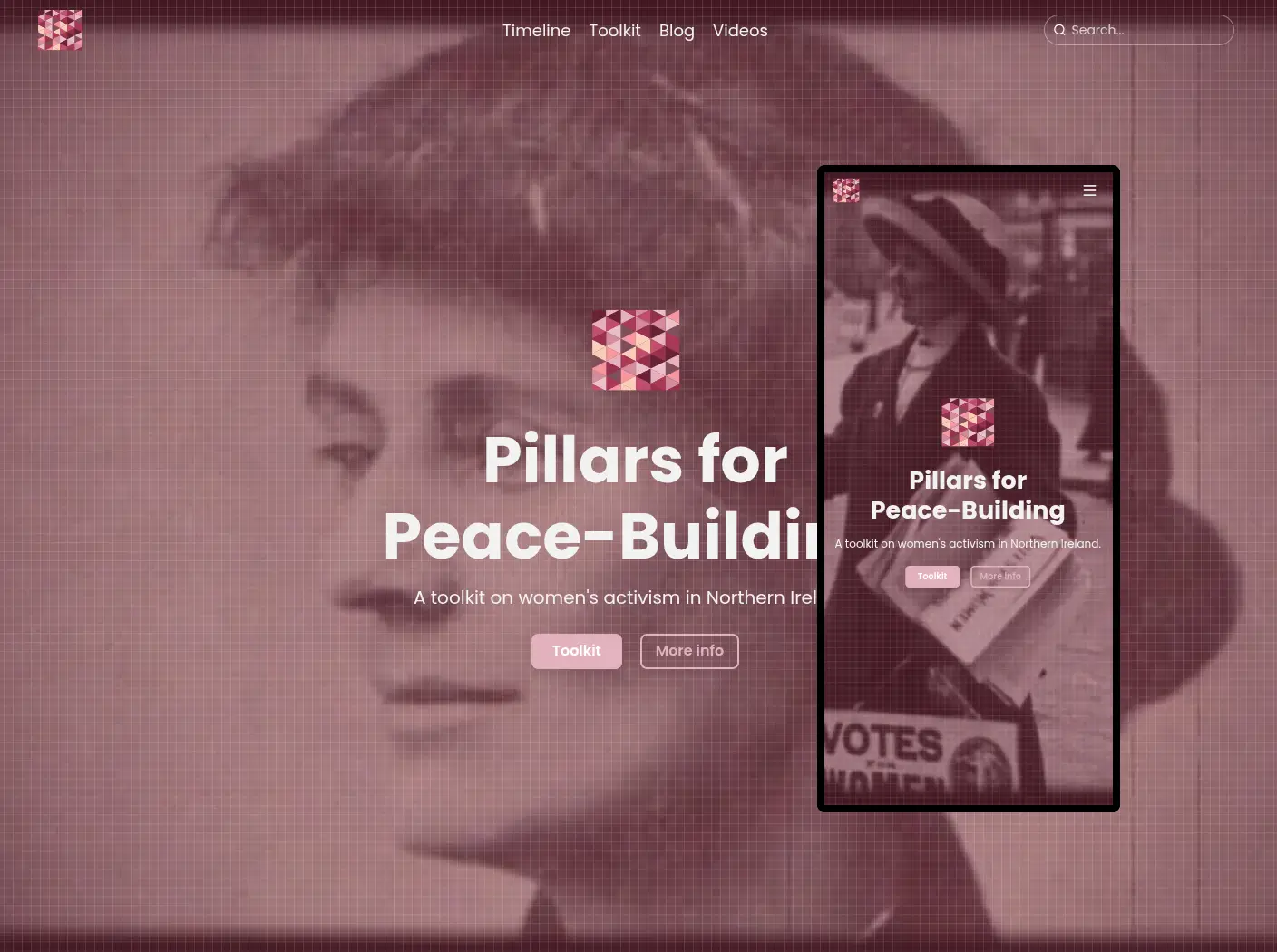
A learning platform filled with resources drawing on both the historical and contemporary experiences of feminist activism and peacebuilding in Northern Ireland.
Charmain Jones & Sarah Stack, Women’s Spaces Programme:
As co-coordinators of the Women’s Spaces Programme, we’re proud to share the story behind Pillars for Peacebuilding — Northern Ireland’s first digital and multimedia toolkit dedicated to amplifying women’s contributions to peace. This platform was never just about documenting the past; it was always about activating peace as a movement, not just a moment—creating a space where others could connect, learn, and take action.
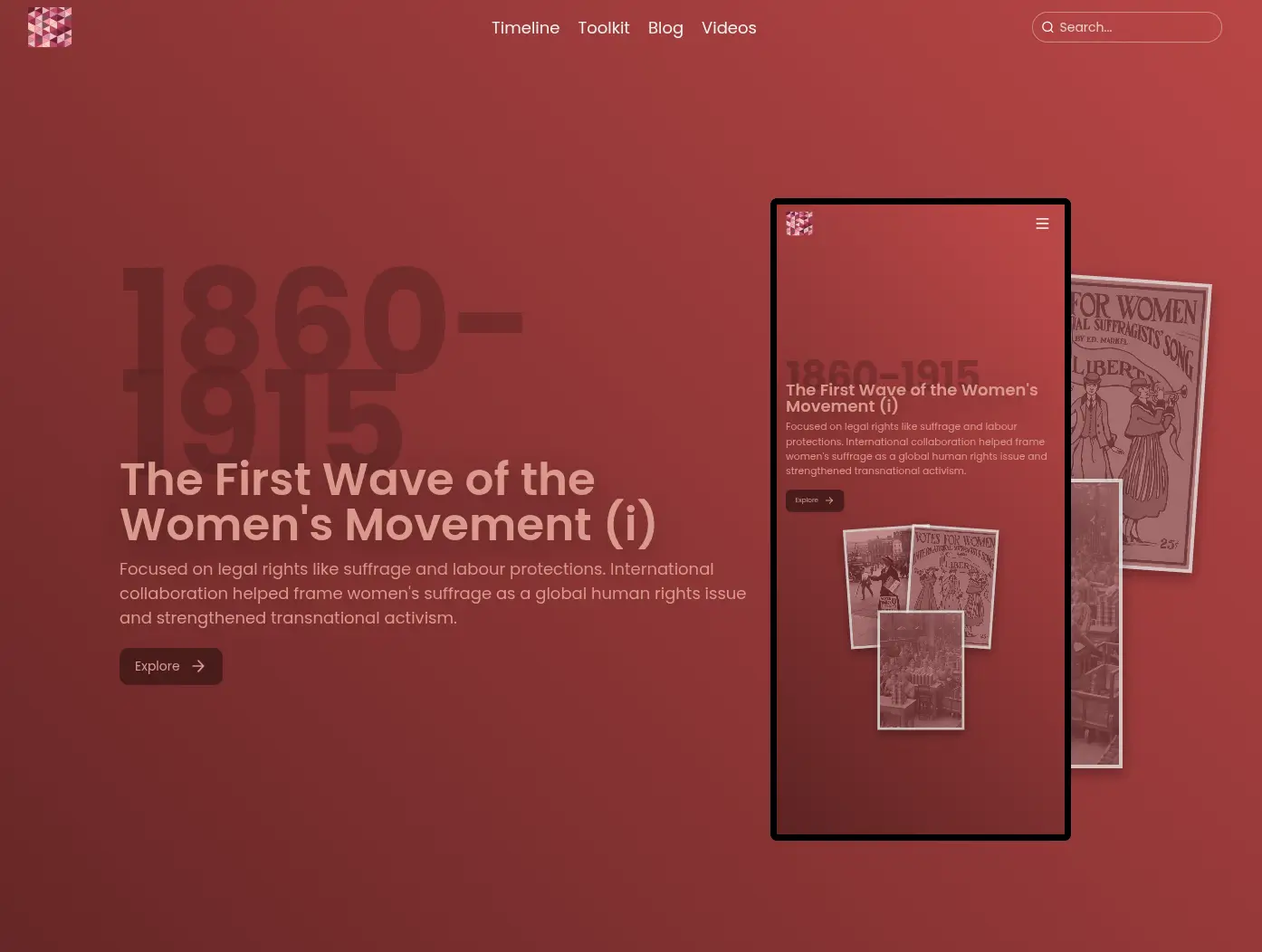
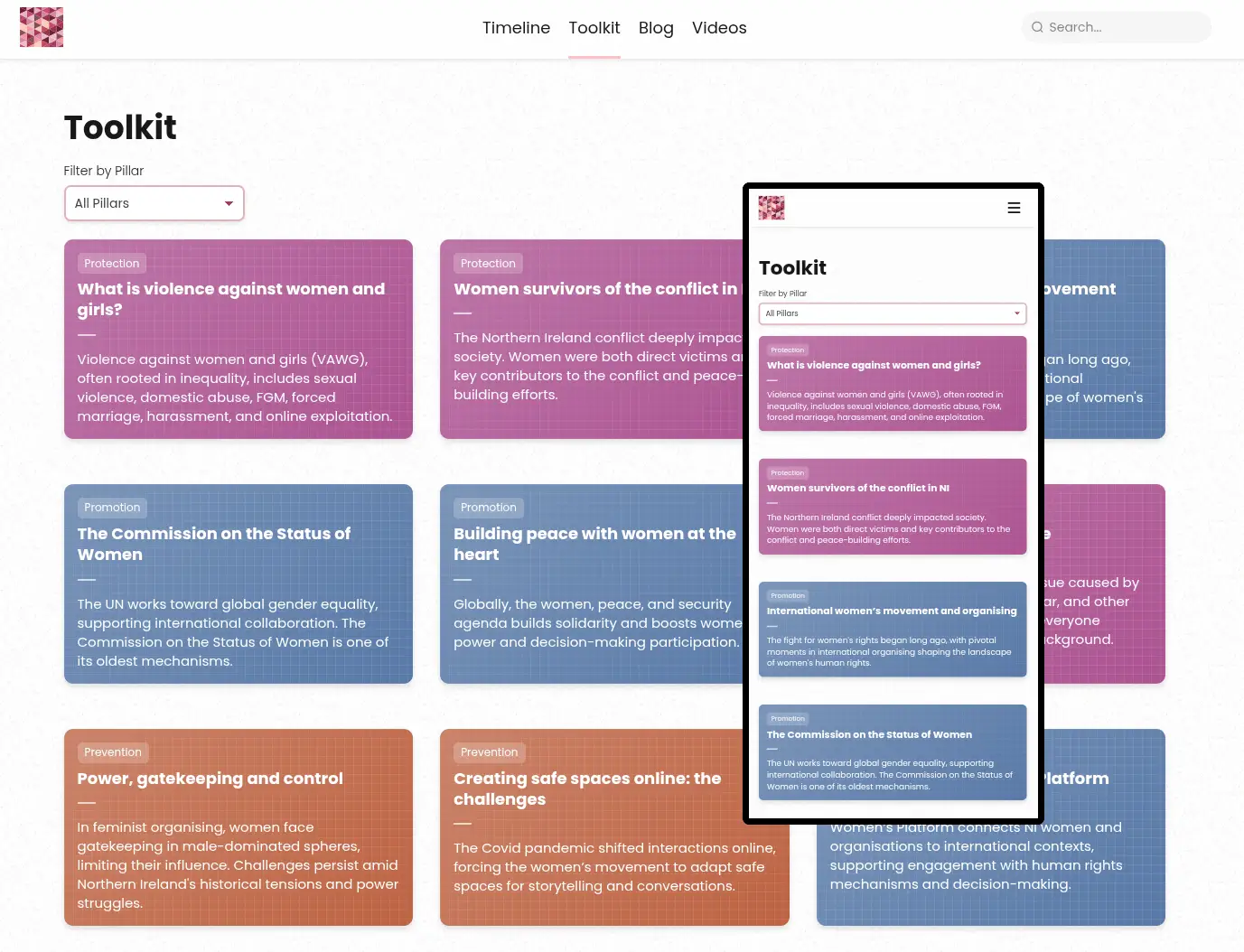
Over three years of workshops, exhibitions, interviews, and community engagement, we shaped the concept for this toolkit with five core pillars: Participation, Protection, Prevention, Promotion, and Gender Inequality—aligned with the Women, Peace and Security agenda (UNSCR 1325). We also envisioned a historical timeline that would trace the legacy of the women’s movement in Northern Ireland.
By the time we approached rabble.coop, we had the core architecture mapped out on paper—but we needed help to bring it to life. We didn’t just want a toolkit that sat on a shelf, we wanted a digital resource that reflected the current times.
rabble.coop took our vision and made it real. With thoughtfulness, patience, and a deep understanding of participatory values, they transformed our paper-based concept into a beautiful, functional, and scalable digital resource. Working alongside us, they:
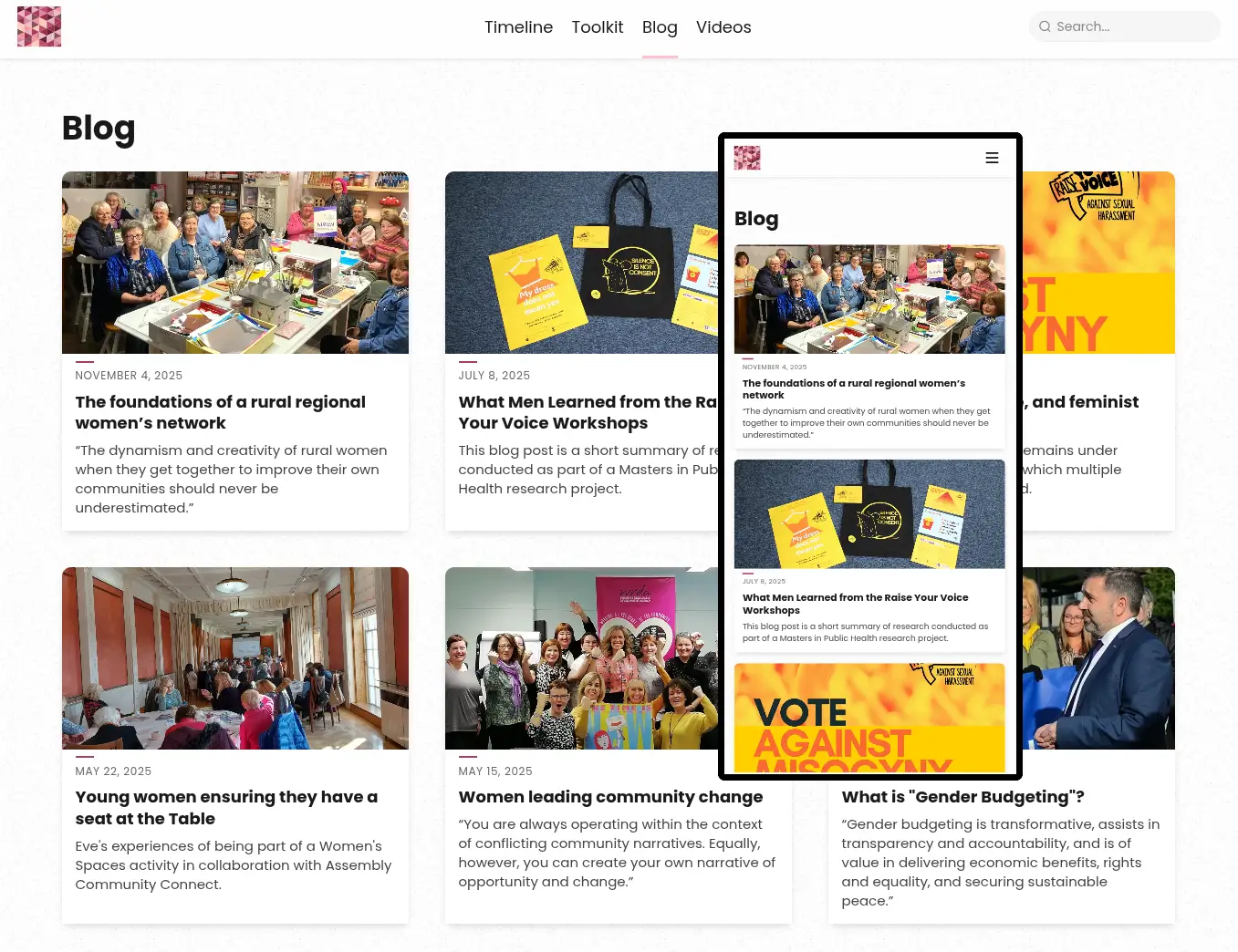
built a clean, user-friendly interface that allows people to explore video interviews, blog-style narratives, tools, and advocacy resources under each pillar;
refined and improved the original structure, suggesting practical changes that made the site easier to navigate—especially on mobile or for users with limited bandwidth;
responded flexibly to our evolving design and content ideas, never losing sight of the toolkit’s purpose: to spark dialogue, deepen connection, and inspire action;
planned for the future, laying a strong digital foundation that allows the platform to grow — with more voices, features, and educational uses in the years ahead.
We launched the toolkit in May 2025 with 25 women’s voices, marking 25 years since the passing of UNSCR 1325. These stories reflect the courage and leadership of women from across communities—many of whom have long been overlooked in official peace narratives.
The feedback has been incredible. Educators, students, community workers, and activists are already using the toolkit in classrooms and workshops. We’ve heard from university departments, rural groups, and grassroots women’s centres—all eager to explore and share the content.
This is just the beginning. The platform was designed to scale, and we are already working on adding more voices, tools, and interactive elements.
You can learn more about how the toolkit works in our e-zine.